My youngest nephew asks whether a tree can miss someone.
I’m on my back under my sister’s kitchen counter when he asks, a drain valve in one hand. With the other, I’m digging out the plug of cold cooking grease somebody has poured into the waste line.
“Depends,” I say. “Who’s the someone?”
“Granddad.”
Above me, a spoon stops stirring.
Lena doesn’t answer for me. She learned years ago that I hate being rescued from certain conversations, even when I’m losing them badly.
Niko crouches at the cupboard door. He’s six, which means his questions show up without knocking and never have the decency to be small. Beside him, filling the rest of the doorway, Milo lies with his chin on his paws and watches my hands the way he watches everything: as if there’s going to be a test later.
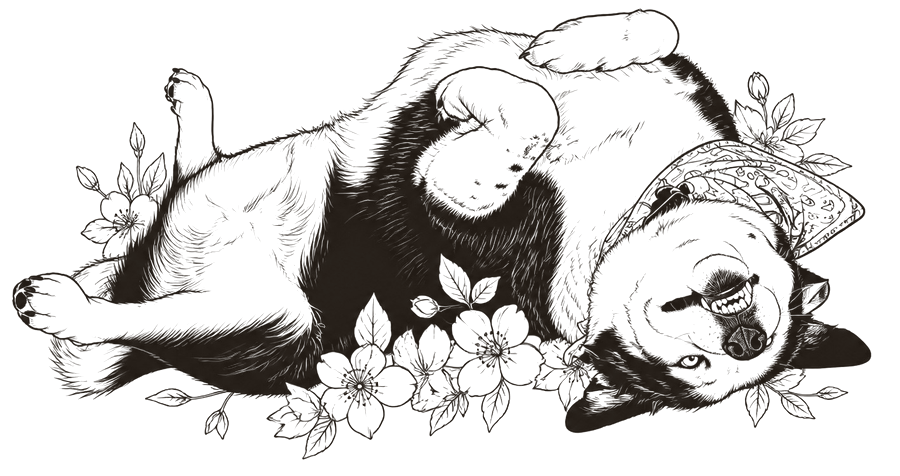
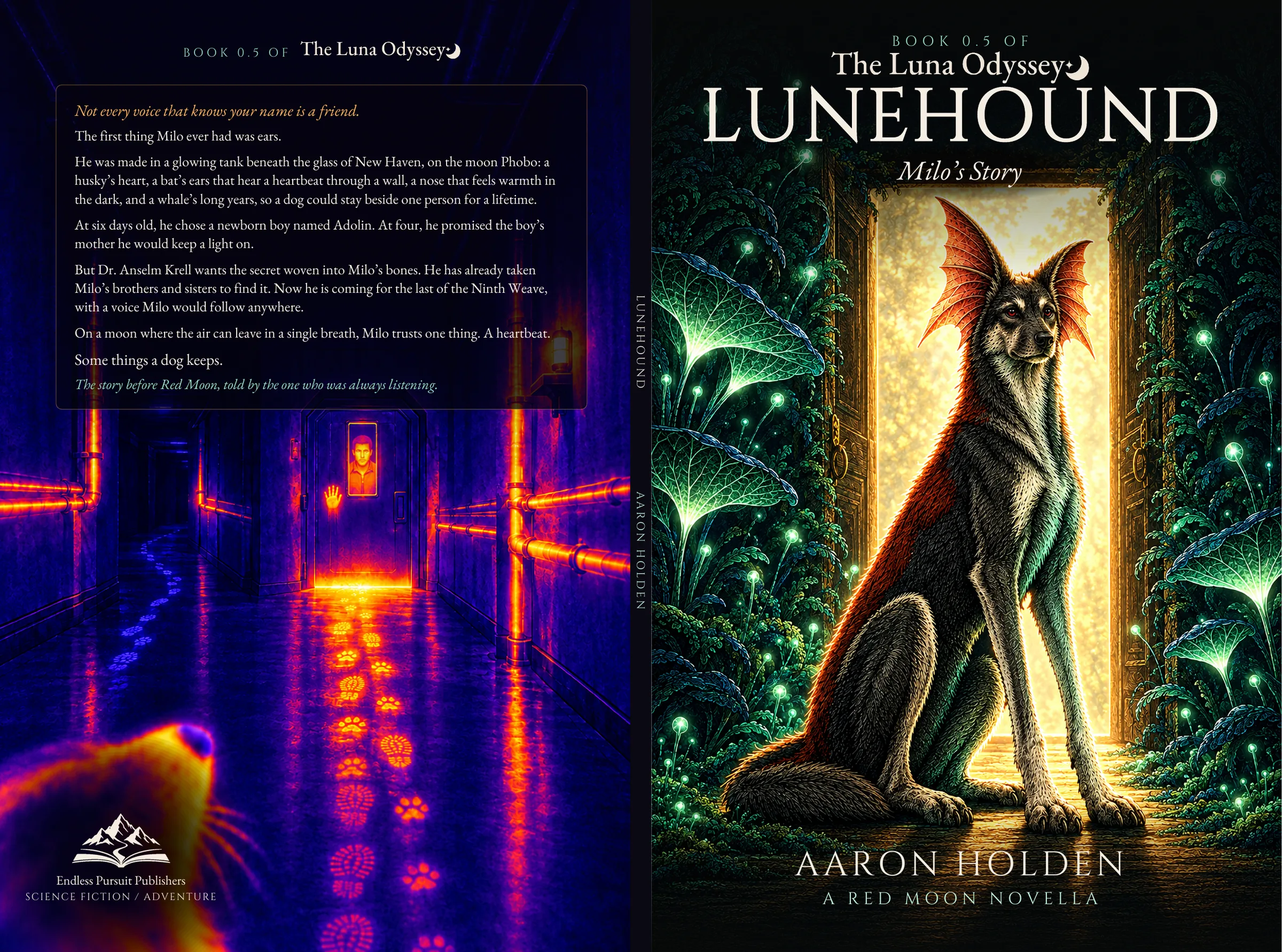
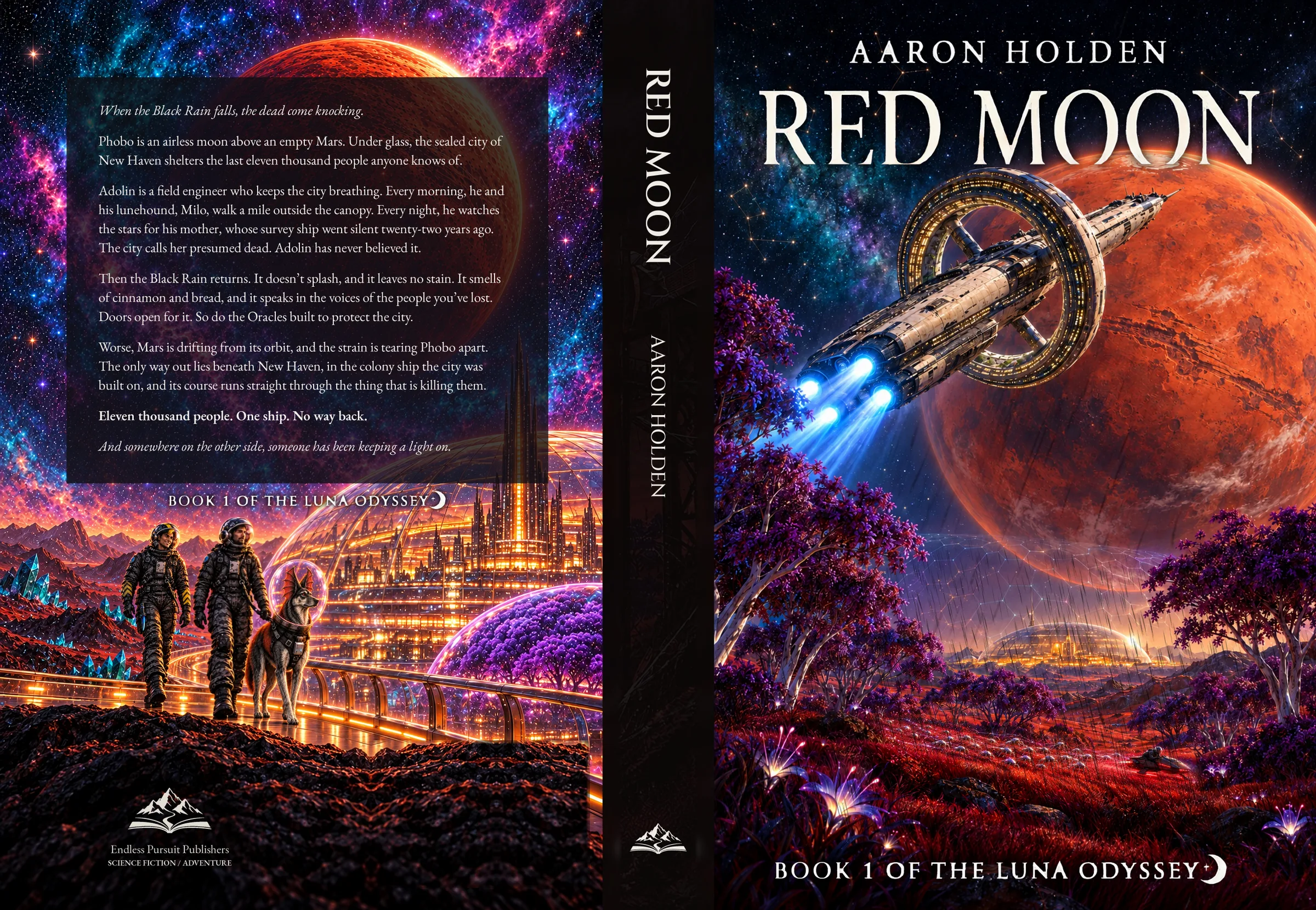
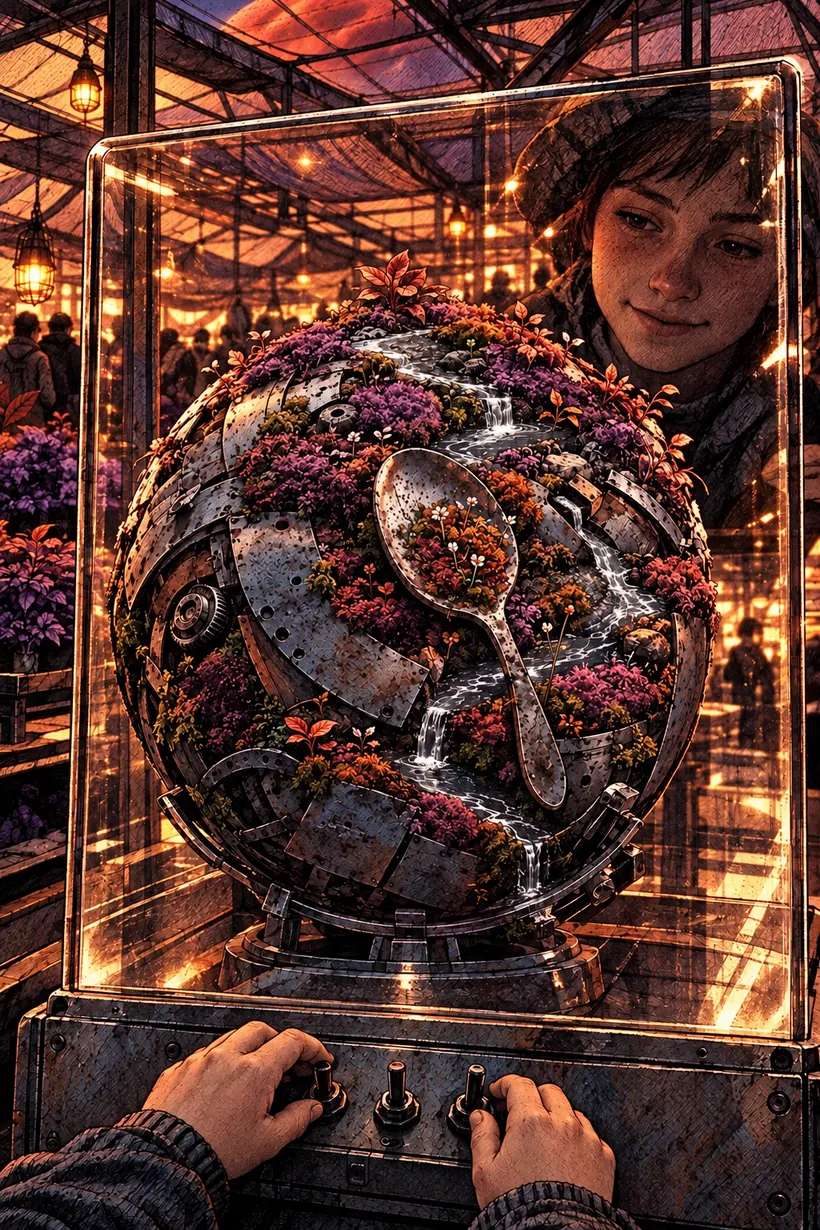
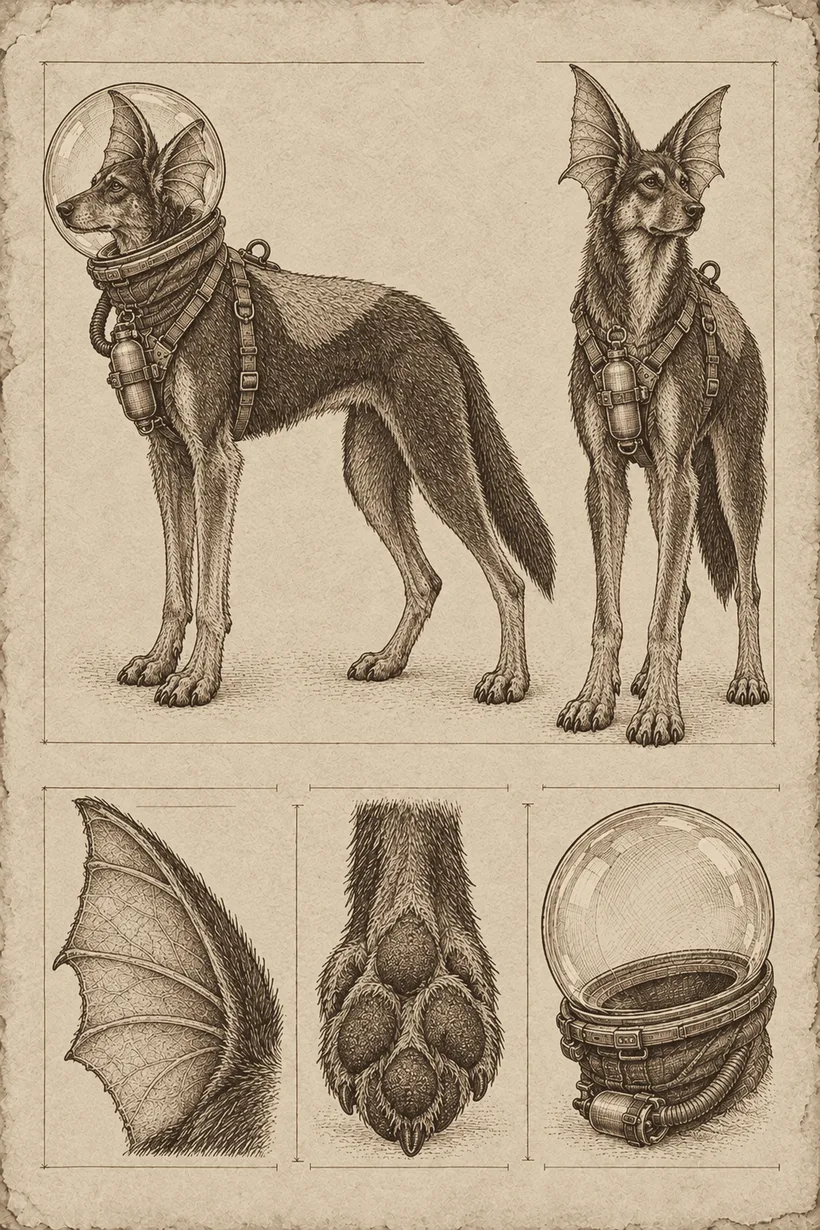
Milo is a lunehound, which is what you get when the grow-hall geneticists take a shepherd line off the Carpe Diem’s embryo shelf and spend forty years teaching it to live on a moon. Long legs built for bounding in light gravity. Wide paws with gripping pads between the toes. A lean, deep chest. A dense charcoal coat with a rust-red saddle over the shoulders and down the back, going pale silver along the chest and legs. Dark red eyes, which unsettle people who don’t know him. And two tall ears that open like a bat’s wings, ribbed with fine bones and lined with a thin, rust-pink membrane that flares when the air pressure drops. Every pressure crew in New Haven would rather have a lunehound beside a leaking seal than a gauge. A gauge doesn’t growl. The geneticists gave the line one more thing, which nobody planned and nobody has explained: lunehounds live about as long as people do. Milo is twenty-eight. So am I. Mom brought him home from the grow-hall kennels the week I was born, a pup the size of a boot, so I’d have someone to grow up with. He was hers before he was mine. He was lying across the doorway the morning she left.
He remembers her. I’m sure of it. Some nights, asleep, his tail thumps the floor twice and his ear membranes flare, as if somebody he loves has just come up the stairs.
He’s my dog. He lives here because my shifts are long and Lena’s floor is warm and five boys drop more food than one engineer ever will. He has made his peace with the arrangement. So have I, mostly.
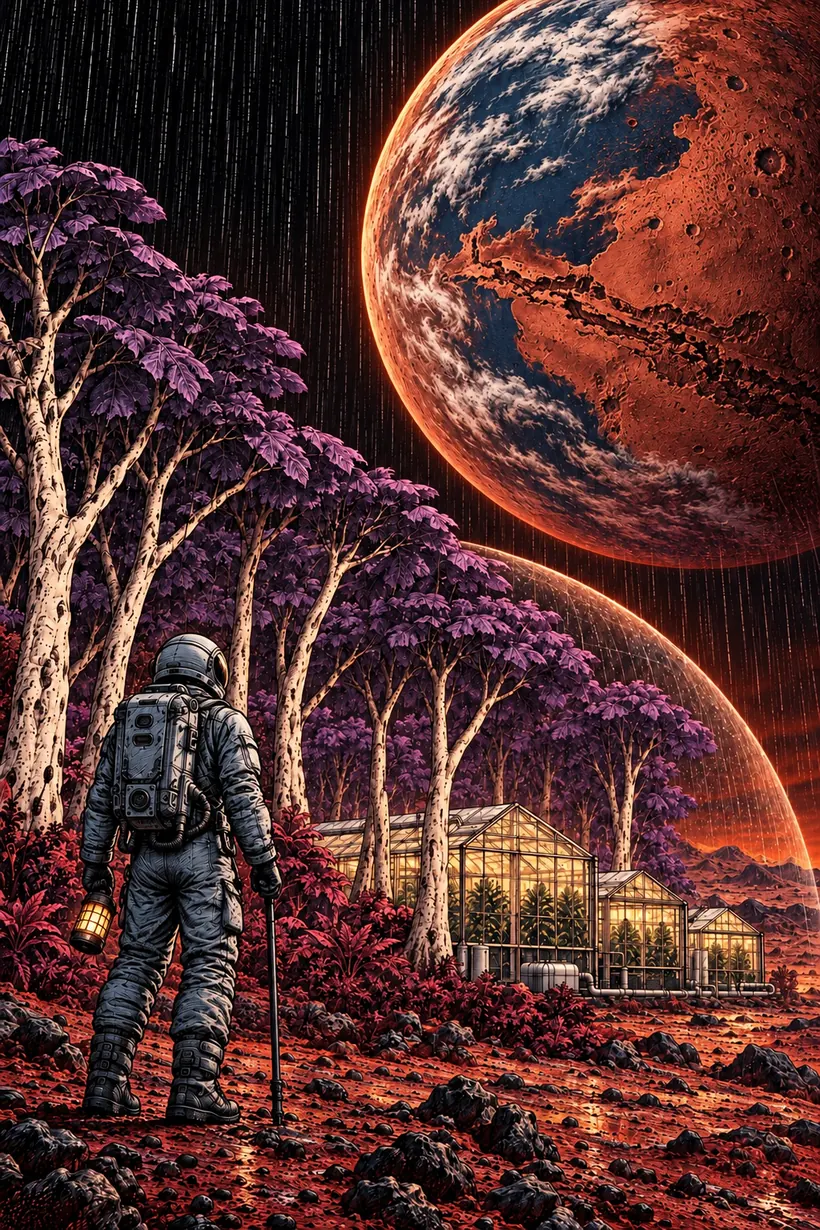
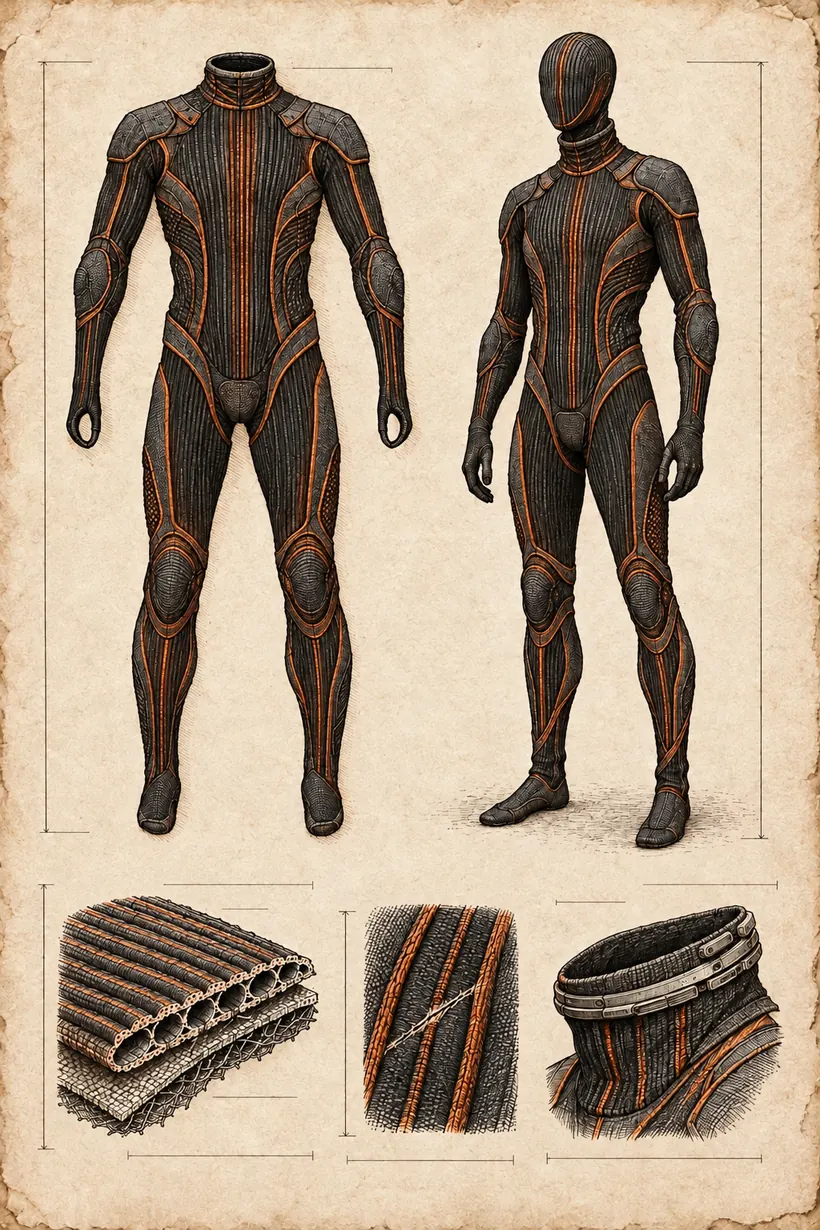
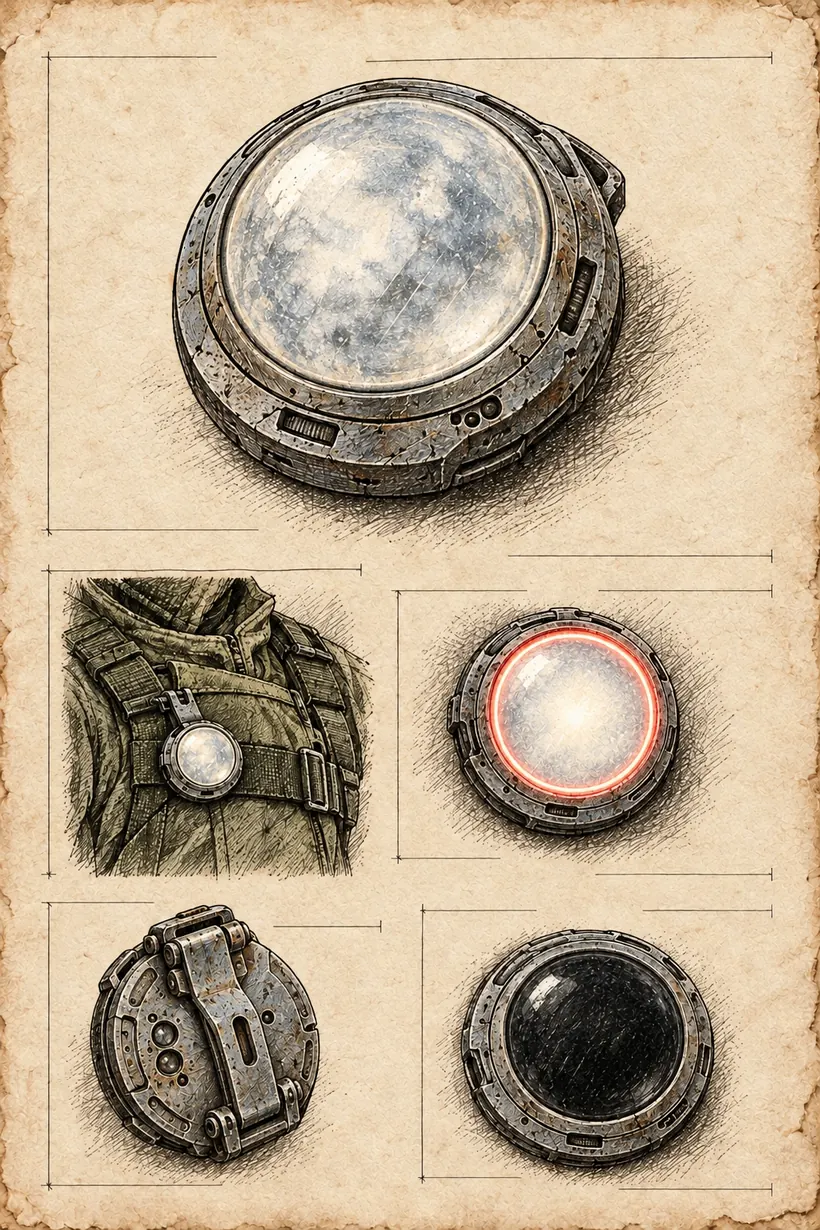
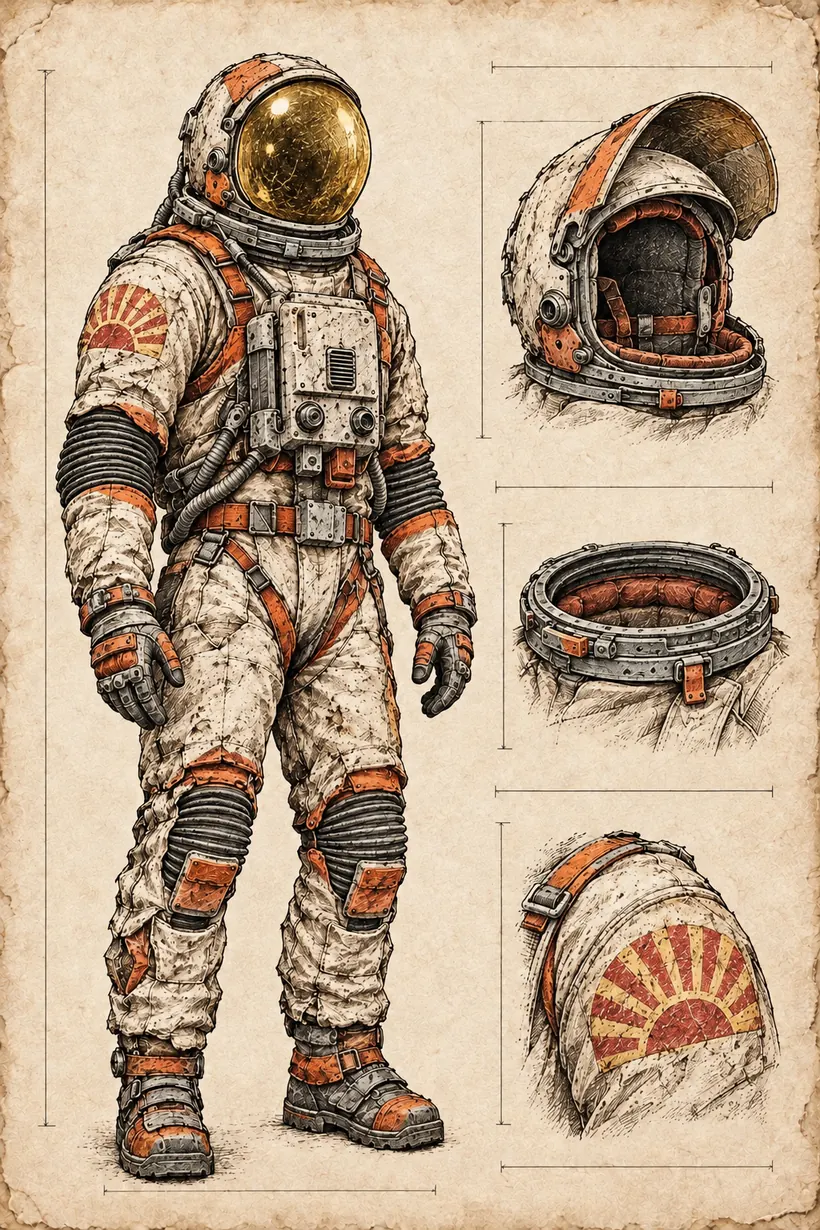
We’ve already done our mile this morning. We do it every morning before my shift: out the Stack Three lock and once around the catwalk on the outside of the canopy, both of us tinned up, me in my suit and Milo in the bubble rig I built him six years ago, the year I made rigger, a pressure harness cut down from a child’s survey suit with a clear dome off an old observation lamp. Lena calls it our space walk, which is generous. It’s a mile of grated steel with Mars on one side and the whole black sky on the other, and a dog who stops to sniff every bolt as if it might be news.
It’s the best part of my day. It has been for six years.
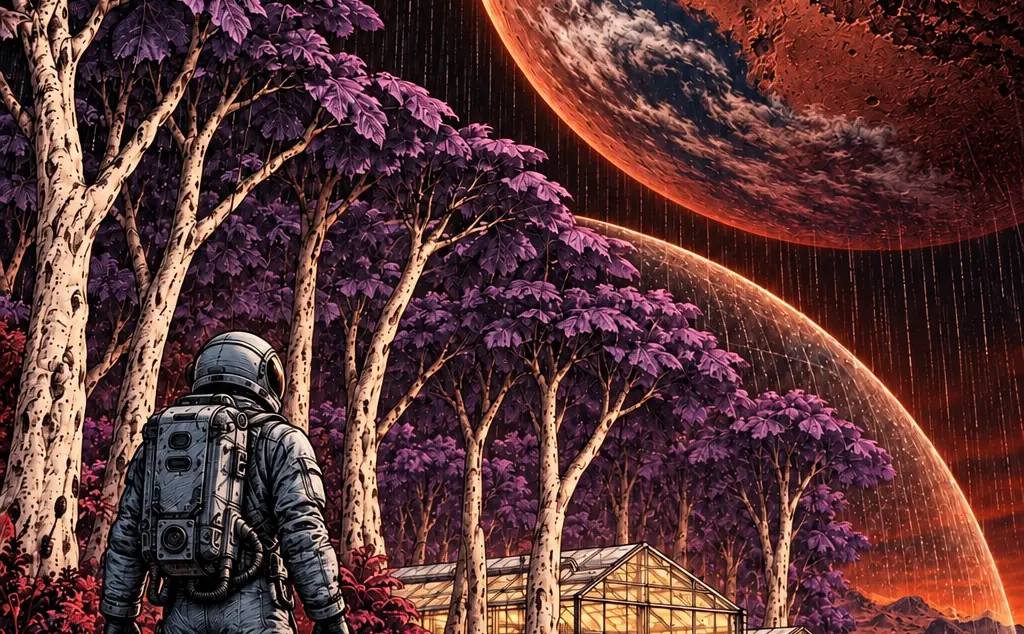
“The big tree has his name on it,” Niko says.
“Your granddad helped plant the grove.”
“So it knows him.”
I look at the clogged valve. There are five boys in this household. Any one of them could have poured the oil. Every one of them has perfected the face of a choirboy who has never heard of oil.
“It might,” I say.
“How?”
“Roots remember where they grew. Even in the dark. Even when the tree is gone.”
✦
Outside the window, New Haven is waking up.
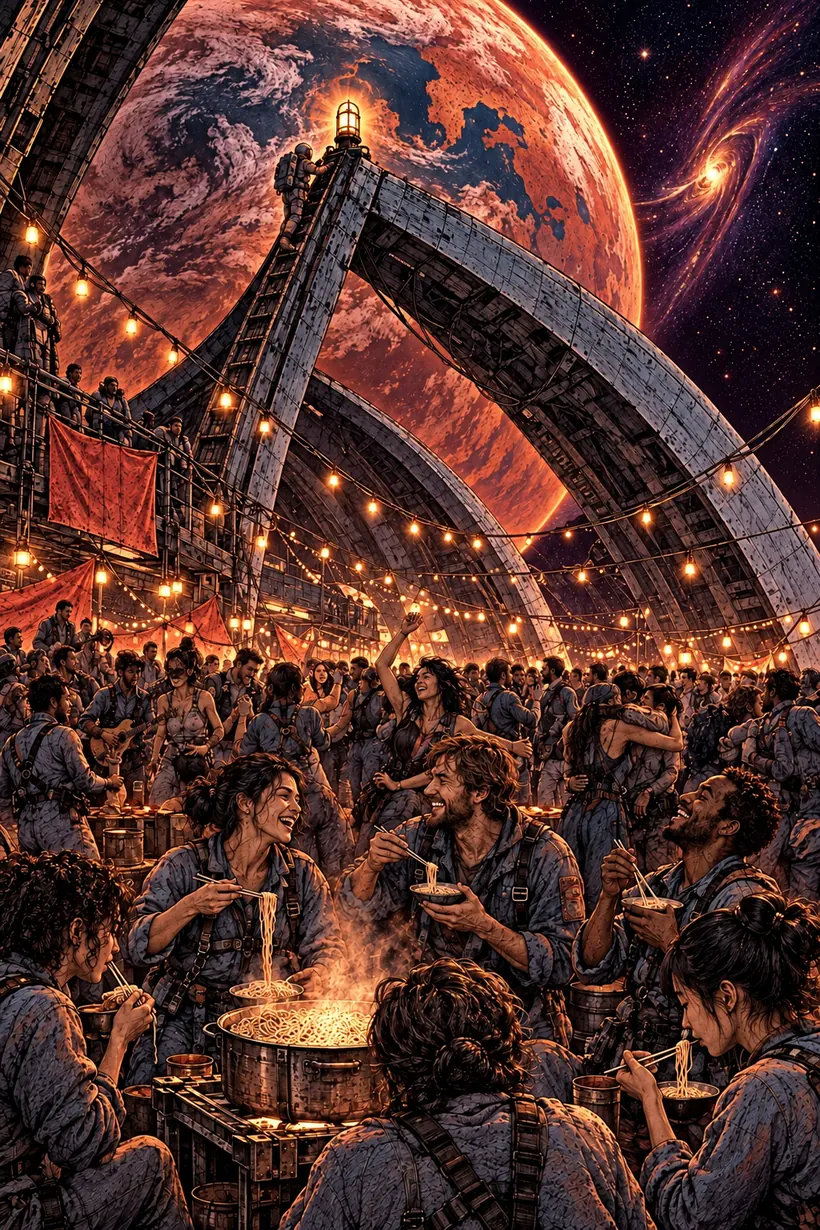
The eastern tram slides between the residential stacks, trailing the hum of old magnets. Growers in green coveralls cross the upper walkway with seed trays balanced on their shoulders. Below them the pressure crews file down toward the plant, carrying the continued existence of eleven thousand people in dented, unremarkable toolcases.
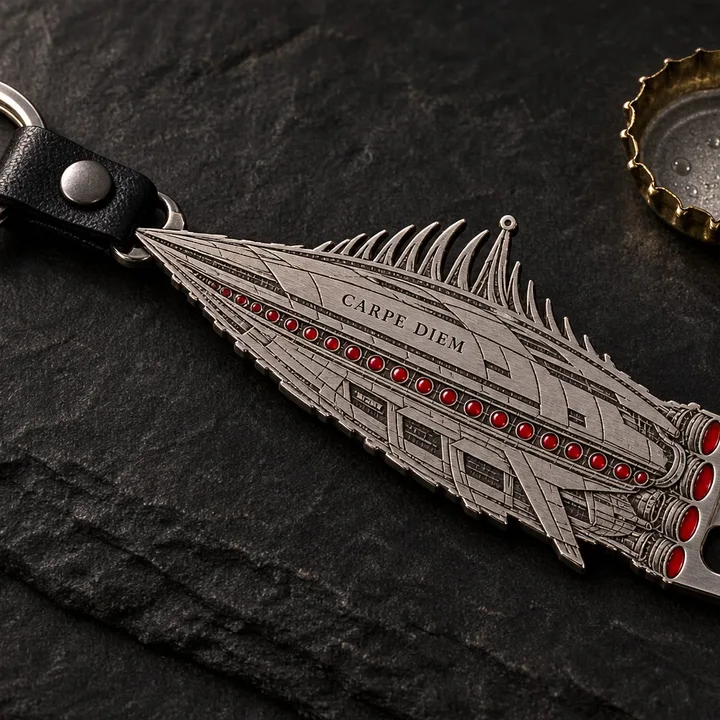
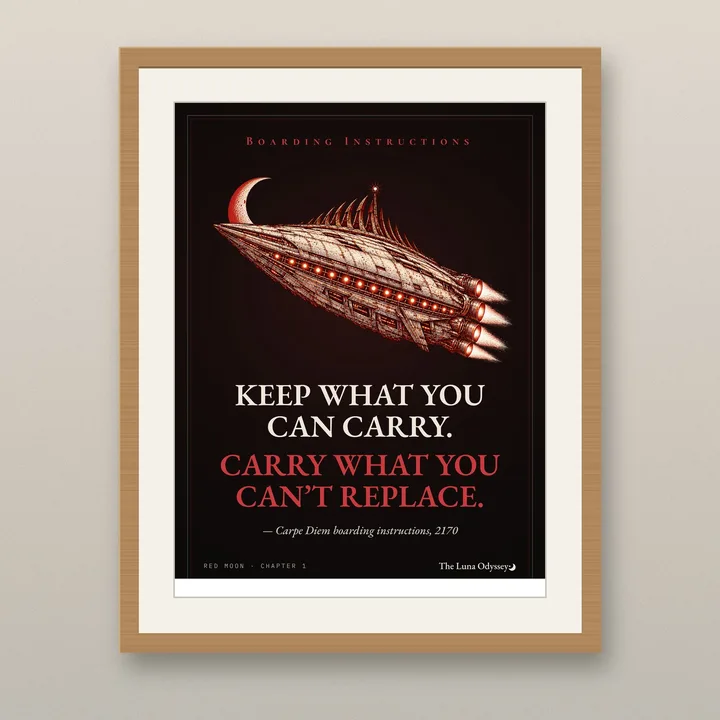
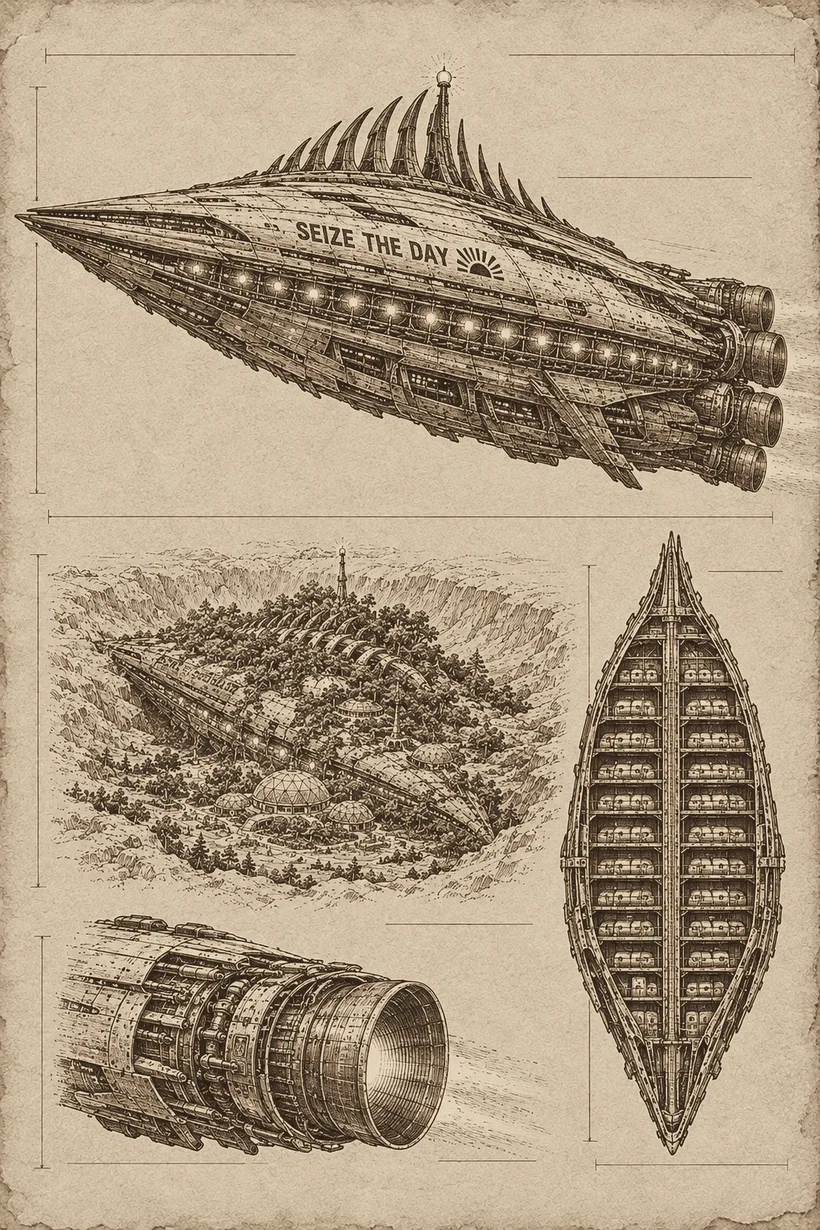
And at the center of everything, the Carpe Diem.
Nobody calls her a ship anymore.
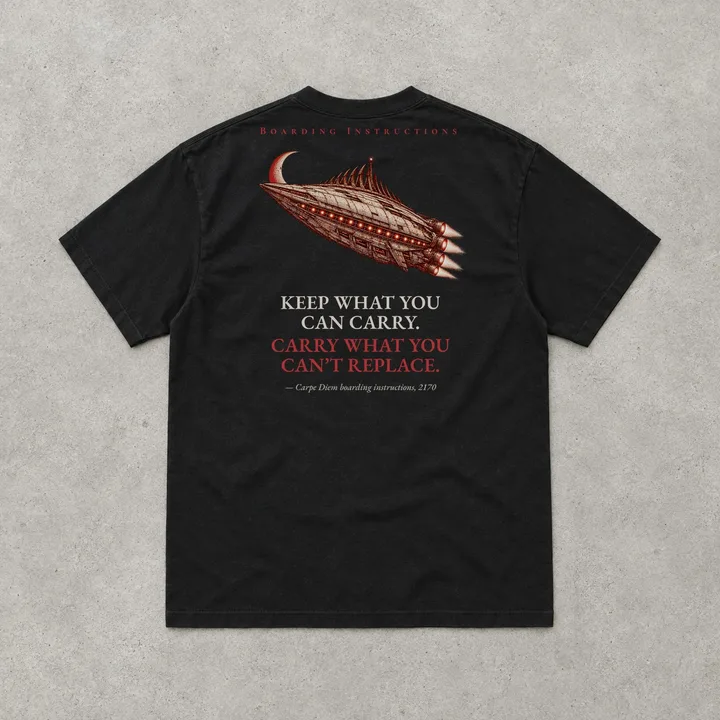
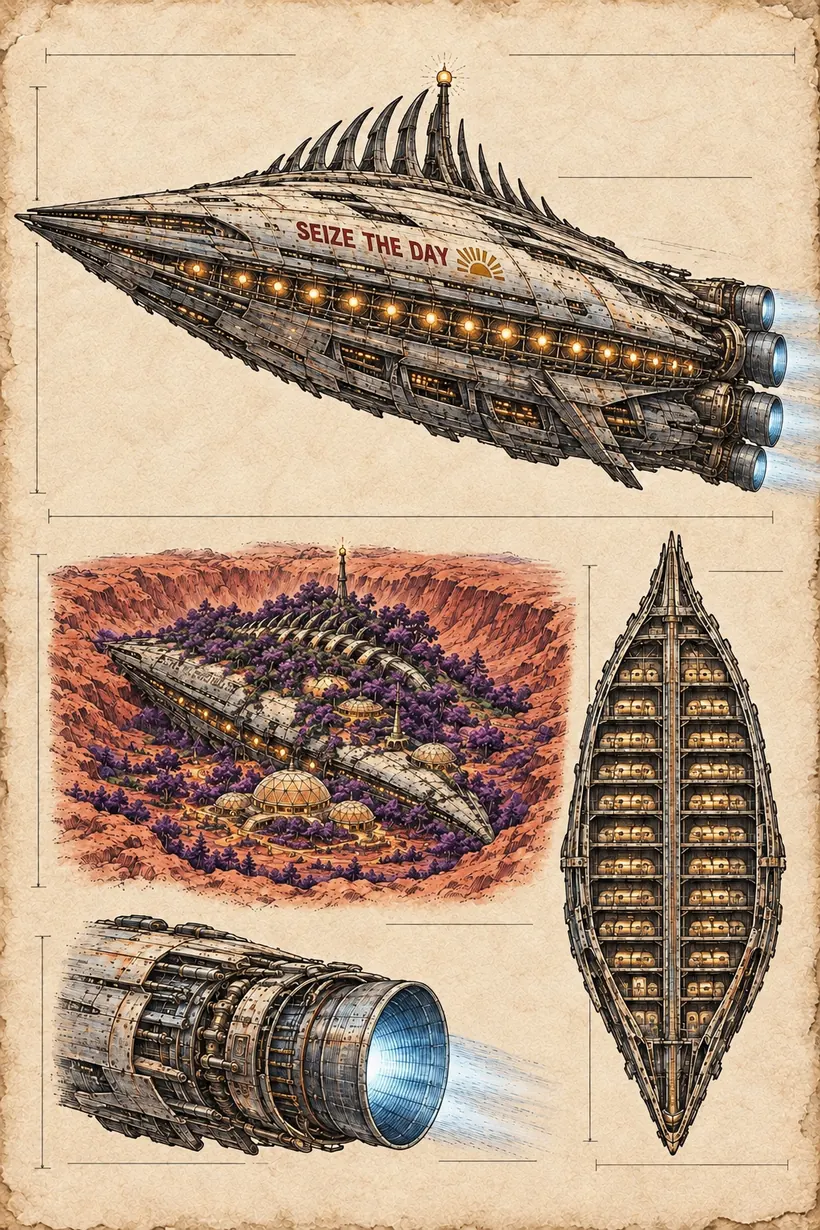
She came out of a dying Earth fifty-odd years ago with nineteen thousand people asleep in her belly. My father was one of them, six years old, clutching a recording of a yellow kitchen. She settled into Stickney Crater beside the old mining town and never lifted again.
Earth went quiet two years after she landed. The long-range receivers kept listening for another decade. Then the council stopped publishing the logs. The old ones call it the Quiet. Since the Quiet, they say, the way other people say since the war.
As far as anyone knows, we’re all that’s left.
 Endless Pursuit Publishers presents